
South Central Federation of Labor AFL-CIO
Organizing for Justice in our Communities


LaborFest is a free, family‑friendly celebration of Wisconsin’s labor movement—bringing together workers, families, unions, and community partners for a day of music, food, and solidarity. Your donation helps keep LaborFest open and accessible to everyone.
Contributions directly support live entertainment, kids’ activities, educational programming, and the local vendors who make LaborFest a vibrant community tradition. Every gift strengthens the event and helps us honor the history, culture, and future of working people in South Central Wisconsin.
Thank you for helping us keep LaborFest strong, welcoming, and free for all.
Donations to Community Labor Working Together, a 501c3 organization, are tax deductible.
.png)

The Wisconsin AFL-CIO is hitting the ground running to elect David Crowley as Wisconsin’s next governor, and we need union members, family, friends, and allies to help us talk with voters across the state.
Whether you prefer knocking doors or making calls from home, there are several opportunities to get involved. Every conversation helps build the power we need to elect leaders who will stand with working families, protect workers’ rights, and fight for strong unions.
Upcoming Canvasses
Come out with fellow union members and help us have one-on-one conversations with voters about what is at stake for working people in this election.
Virtual Phone Banks — Tuesdays & Thursdays, 4:00–7:00 PM
Our phone banks will be run through Scale to Win, so volunteers do not need to use or expose their personal cell phone numbers. You can participate virtually from wherever you are.
Tuesday, September 8
https://www.mobilize.us/wiaflcio/event/1019490/
Thursday, September 10
https://www.mobilize.us/wiaflcio/event/1019491/
Pick the date that works best for you and sign up through the links above.
David Crowley has an opportunity to be a strong voice for working people in the governor’s office, but winning will take all of us doing our part. A few hours of your time can make a real difference.
When working people stand together, we win together!

.png)

Freedom Fund Dinner Sponsorship and Ticket Info here






Please sign the petition to Kristie Maurer, owner of Maurer's Market that is opening on Park Street near the Madison Labor Temple, asking her to sign a neutrality / card check agreement with UFCW, Local 1473!
Many employers, big and small, have done this, as it benefits the workplace and the business as well. When they do sign an agreement, it demonstrates their commitment to giving their employees a voice on the job.
The Park Street location is Madison's second busiest corridor, regularly traveled by many of our Union and community members on their way to and from work. There are many unions, non-profits, and community members who work at, hold events at, or visit the Madison Labor Temple, just down the block from the new grocery store. They want to support and shop at a store where workers have strong, family-sustaining union jobs backed by a collective bargaining agreement!


Hilton Madison Monona Terrace Petition
Workers at Madison Monona Terrace voted to join UNITE HERE Local 1 in August of 2025. They deserve a fair contract.
Please have your organization sign on to a letter to President and Chief Executive Officer of the Marcus Corporation here.
To sign on as an individual go here.
Congress must act: Stop the Forest Service workforce dismantlement

Tens of thousands of U.S. Forest Service employees represented by the National Federation of Federal Employees (NFFE-IAM) are urging members of Congress to oppose the Trump administration's announced plan to relocate Forest Service headquarters to Salt Lake City, Utah, and eliminate all regional offices.
This is not a management reform. It is a reckless dismantlement of the workforce and institutional structure responsible for managing more than 193 million acres of national forests and grasslands that belong to the American people.
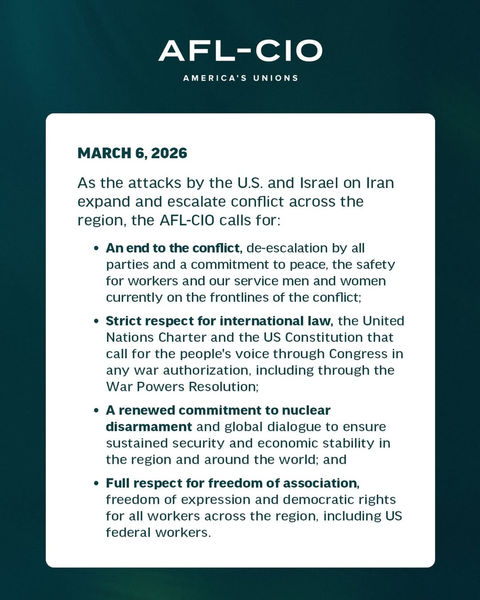
As we participate in any form of protest, rally, action, or event, it’s important to know our rights.
The National AFL-CIO sent out the following from the ACLU: KNOW YOUR RIGHTS:
"The First Amendment protects your right to assemble and express your views through protest. However, police and other government officials are allowed to place certain narrow restrictions on the exercise of speech rights. Make sure you’re prepared by brushing up on your rights before heading out into the streets.”
To learn more, go to https://www.aclu.org/know-your-rights/protesters-rights.

Interested in joining the SCFL Young Worker's Committee meetings and/or receiving notifications related to SCFL YWC activities and events? Fill in this survey to stay in the loop with all things SCFL YWC!
Please send any questions or comments to ywc@scfl.org


Get Your Proud Union Home yard sign!
For only $10 you can get your Union-made (right here in Wisconsin) sign by contacting us at: Solidarity@SCFL.org
Email for a time to pick your sign up.

Click here to see upcoming School for Workers classes
